Specialist supported living

A home that's theirs.
Support that fits.

We find the right home, adapt it to the person, and build a support plan around what they want their life to look like. Specialist supported living for adults with learning disabilities.

Scroll
What makes us different

Built by people
who know care
from the inside.

The directors of MH&S bring over 20 years of social care and nursing experience, gained working with vulnerable people from birth through to 65. That includes deep specialism in learning disabilities, autism, and complex needs across the full lifespan.

Qualified nurses and social workers by background, they understand what genuinely person-centred care requires. Not as an ideal, but as a professional discipline built over two decades of frontline practice. That depth of experience shapes every decision at MH&S, from how support plans are written to how the team is recruited and trained.

What we offer

Our Services

We provide the home and the support package as a joined-up service. You don't have to piece it together from multiple providers.

Housing

Suitable accommodation, tailored to the person.

We source and adapt homes that genuinely fit the individual. The right property, arranged and personalised around the person who will live there. We encourage independence from the moment someone moves in.

Supported living accommodation
Support Services

Person-centred support, built around each individual.

Each support plan is built collaboratively with the individual themselves. Covering lifestyle development, community access, and independent living skills, with communication approaches and goal-setting shaped around how they think and what they want their life to look like.

Learning disabilities Autism Epilepsy Anxiety Visual impairments Complex needs
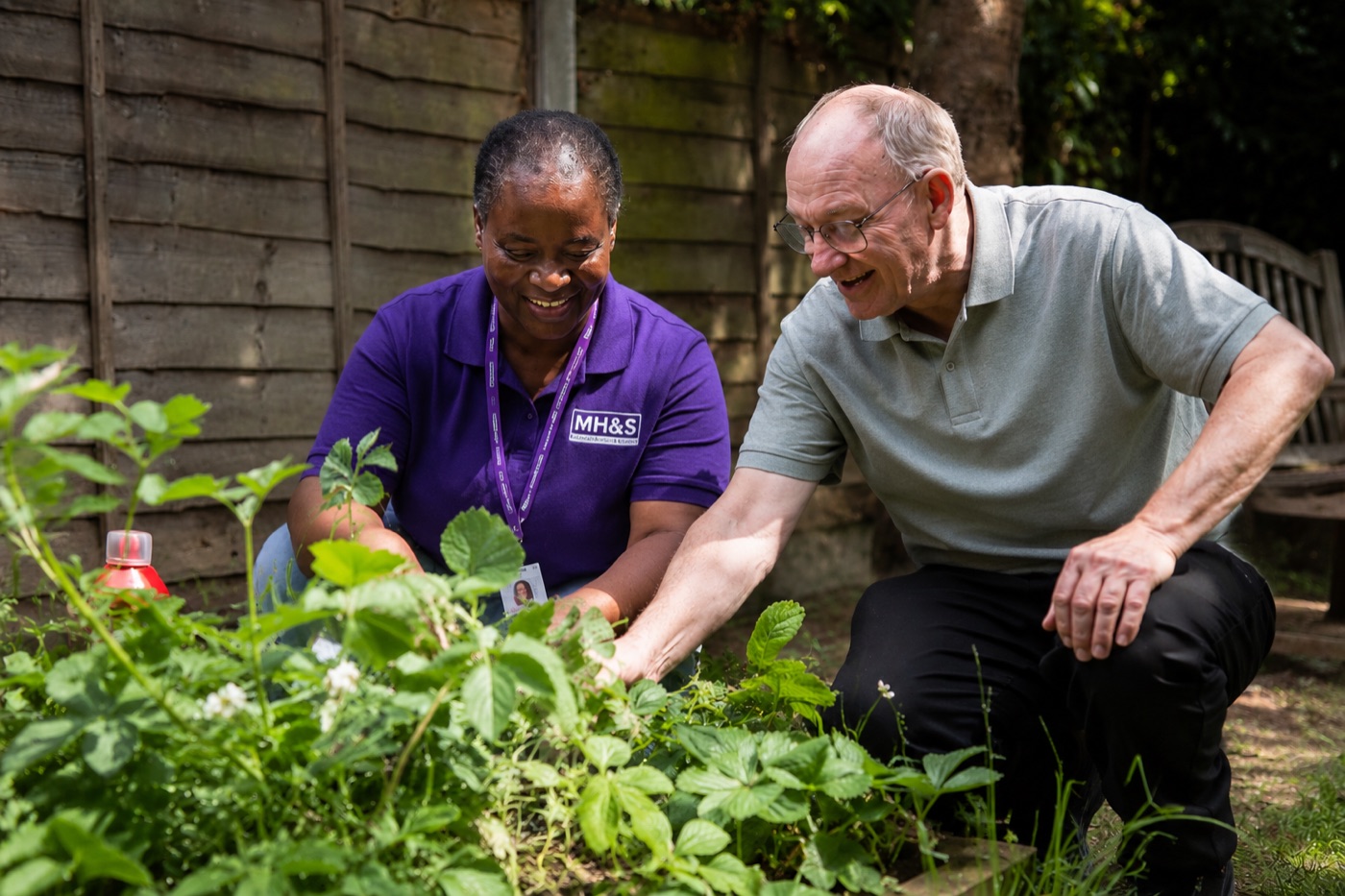
Person-centred support in action
Our values

Four words.
Everything we do.

E
Empathy

We take time to understand each person, not just their needs on paper. Their feelings, their history, how they communicate, what actually matters to them.

C
Care

Genuine care shows up in small things done consistently, not big gestures done occasionally. We build trust through reliability and respect, every shift.

H
Honesty

We tell families what's happening, good and bad. If something needs to change, we say so. Nobody benefits from information being filtered.

O
Openness

The best outcomes for the people we support come from working with everyone around them, not instead of them. NHS teams, families, advocates, and the individuals themselves.

Making a referral

How it works

Straightforward for NHS teams, families, and anyone getting in touch on behalf of someone they care about.

1

Get in touch

Call or email us with an initial enquiry. We respond within one working day.

2

Initial assessment

We review the person's needs, goals and preferences to check we're the right fit.

3

Match and plan

We suggest suitable properties, the individual chooses their preferred one. We build an initial support plan with the individual and people involved in their care.

4

Move in

We support a careful transition and hold regular reviews to make sure the placement is working well.

Regulated care

Registered with and regulated by the Care Quality Commission (CQC).

Every registered provider has to meet a set of standards. We don't just meet them, we use them as a baseline, not a ceiling. Our CQC registration means we are independently inspected, and our report is available to anyone who wants to read it: the people we support, their families, and any team working alongside us.

Transparency is not a policy for us, it is how we operate. If you'd like to discuss our inspection history or what regulation means in practice for the people in our care, call us or ask when you visit.

The Maranatha Housing and Support team in a team meeting
Join the team

Work that challenges you, rewards you, and genuinely matters.

Our staff are the reason the people we support thrive. We look after the team that looks after them, with real training, consistent management, and a workplace that values the work you do.

  • 01
    Specialist training from day one Induction, mandatory training, and ongoing development in areas like autism awareness, epilepsy, and positive behaviour support
  • 02
    A supportive, close-knit team Regular supervision, a manager who is genuinely available, and colleagues who understand the demands of the role
  • 03
    Work that makes a visible difference You will know the people you support well, and you will see the impact of what you do. That is not something many jobs can offer.
Family visiting a supported living home
For families & carers
Families & carers

Handing over care is one of the hardest things a family does.

We don't take that lightly. Our role isn't to replace your family, it's to extend it. Here's what you can expect from us from day one.

  • You stay involved in every decision

    Support plans are built with the person and their family, not written behind closed doors. Reviews happen regularly and you'll always have a direct line to the team.

  • Clear, consistent communication

    No chasing for updates. We agree a communication rhythm with each family at the start, whether that's weekly calls, daily notes, or something in between.

  • Transition support from day one

    Moving into supported living is a big step. We work with families through the whole transition, not just the admin side, but the emotional side too.

Ready to find out more?

Whether you're a family exploring options, someone who wants to join us, or just want to ask a question, we'd love to hear from you.

Built on
experience.
Driven by purpose.

Over 20 years of social care and nursing experience. A decade of building something we'd actually want for our own families.

We started because we knew what good care looked like. And how rarely it happened.

Maranatha Housing & Support was founded by people who spent years inside the care sector, long enough to see its patterns. Good intentions let down by bad systems. People with learning disabilities placed in homes that felt institutional. Support workers stretched too thin to do the job properly.

We set out to build something different. Not a big provider with hundreds of placements and a head office that never visits. A focused, specialist service where we know every person we support, every family, every team that has worked alongside us.

"Our test for every decision is simple: would we want this for our own family member? If the answer is no, we change the approach."

We support adults aged 18 to 65 with learning disabilities, autism, epilepsy, anxiety, visual impairments and related conditions. We are a small, focused service and that is a deliberate choice. It means every person we support gets our full attention, not a fraction of it.

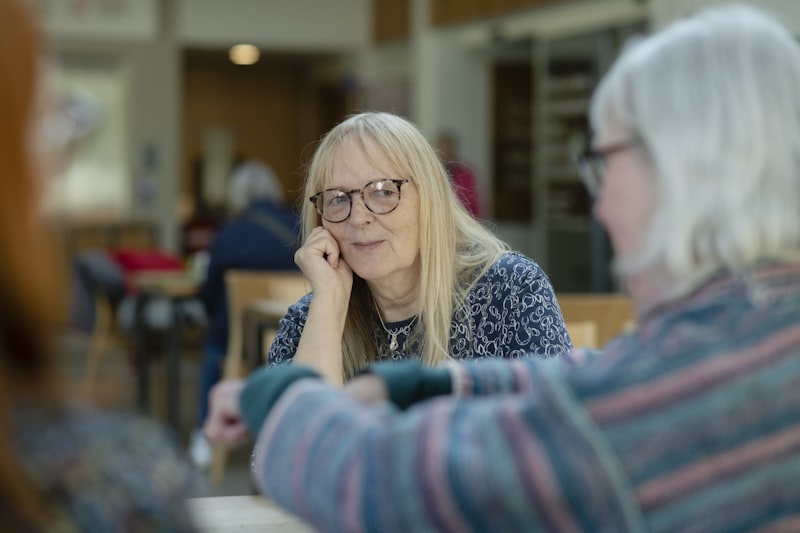
Support worker in attentive conversation with someone they support
Two hands clasped together in a moment of care and support
Why MH&S

Three things that make the difference

01

Founded by practitioners

The directors of MH&S came from nursing and social care, not from business. Over 20 years of frontline experience shapes how decisions get made here, from staff selection through to how support plans are written.

02

Specialists, not generalists

We work specifically with adults with learning disabilities and associated conditions. That focus means our staff training, our homes, and our approach are all built around this group, not adapted from something more generic.

03

People, not placements

We're small enough that our managers know every person we support by name. The support workers who walk through someone's door are consistent, familiar faces, not agency staff filling a rota gap.

Our values

E.C.H.O. in practice

E

Empathy

Empathy

We take time to understand each person before we do anything else. Their communication style, their history, their triggers, what brings them joy, what causes them distress. Support that isn't grounded in that understanding isn't really support.

C

Care

Care

Care shows up in consistency. Turning up on time. Knowing that someone likes their tea with two sugars and has done for years. Building relationships slowly, with patience. The work is demanding, and the people who do it well take it seriously.

H

Honesty

Honesty

We communicate openly with the people we support, their families, and every team working alongside us. If something isn't working, we say so. If we need to change an approach, we explain why. There is no place for papering over cracks in this work.

O

Openness

Openness

The best outcomes come from working with everyone in a person's life, not acting as a silo. NHS teams, families, advocates, and the individuals themselves all have a role to play. We make space for all of them.

Want to talk to us directly?

Visits are welcome. Questions are welcome. We'd rather answer them properly than have you rely on a brochure.

Supported living
services built
around people.

Quality housing and personalised support built around each individual. Both, joined up, from one provider.

01 / 05

Quality Housing

Where someone lives shapes everything else. A home that fits gives the people we support a genuine foundation to build their lives from. We choose and adapt each property around the individual, so they can feel settled, secure, and proud of where they live.

  • Accommodation selected and adapted to the individual's specific needs and preferences
  • Sensory-friendly environments for autistic individuals where needed
  • Physical accessibility adaptations where required
  • The people we support are encouraged to personalise and make the space their own
  • Maintained to a consistently high standard
A welcoming, well-maintained supported living home
Housing
02 / 05

Person-Centred Support Plans

A good support plan is a living document built with the person, not written about them. Ours capture not just what someone needs day to day, but who they are, how they communicate, what they want their life to look like, and the steps we will take together to get there.

  • Co-produced with the individual, their family, and their wider network
  • Communication profiles for non-verbal individuals, including augmentative and alternative communication approaches
  • Personal goals and measurable outcomes built in from the start
  • Positive risk management that enables freedom, not just safety
  • Reviewed regularly and updated as the person grows and changes
Person working on their support plan
Support Plans
03 / 05

Lifestyle Development

A safe place to live is the starting point, not the destination. The goal is a life the person actually wants. Lifestyle development means helping each person discover what brings them joy, build routines that give them purpose, and develop the connections that make them feel part of something.

  • Finding and developing interests, hobbies, and activities
  • Building and maintaining friendships and social connections
  • Facilitation of clubs, classes, events, and new experiences
  • Goal-setting with real milestones the person cares about
  • Exploring education, volunteering, and employment opportunities
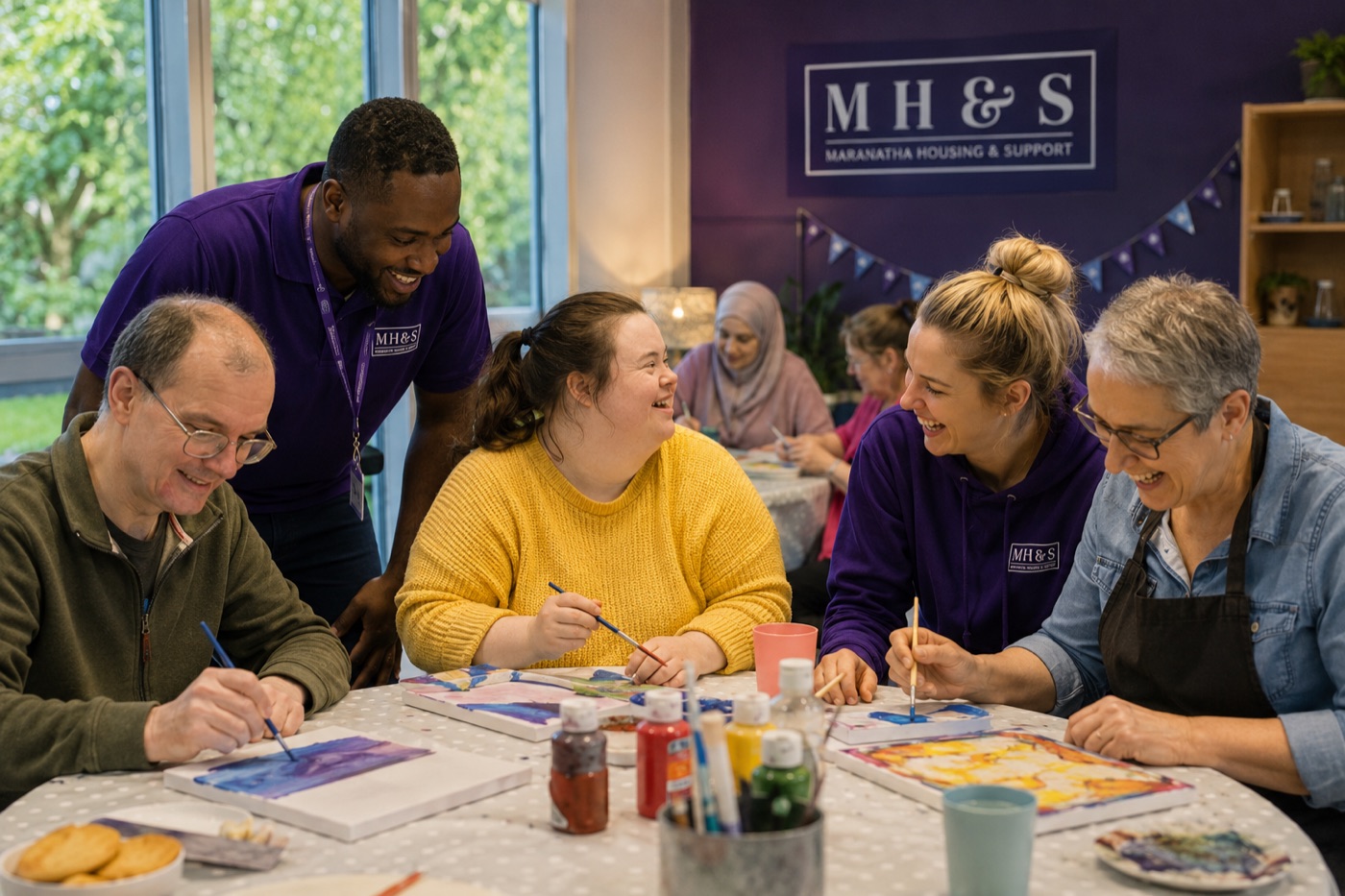
People enjoying activities and hobbies together
Lifestyle
04 / 05

Community Access

Living in a community and being part of one are not the same thing. We support the people we work with to get out, engage with the world around them, and build real connections in it. Our staff are there to enable, not to do things for people. The goal is confidence and belonging.

  • Shopping, banking, and everyday errands
  • Healthcare appointments and medical support
  • Leisure, sport, cinema, parks, libraries
  • Using public transport safely
  • Employment, work experience, and volunteering
  • Education and adult learning
Person out in the community
Community
05 / 05

Independent Living Skills

Independence is always the direction of travel. Our goal is to reduce how much support someone needs over time, not to keep them reliant on it. We actively teach and reinforce the practical skills that allow the people we support to manage their own lives, on their own terms.

  • Cooking, meal planning, and food safety
  • Personal hygiene and self-care
  • Housework and home management
  • Managing money and budgeting
  • Using technology: phones, tablets, computers
  • Understanding correspondence, bills, and letters
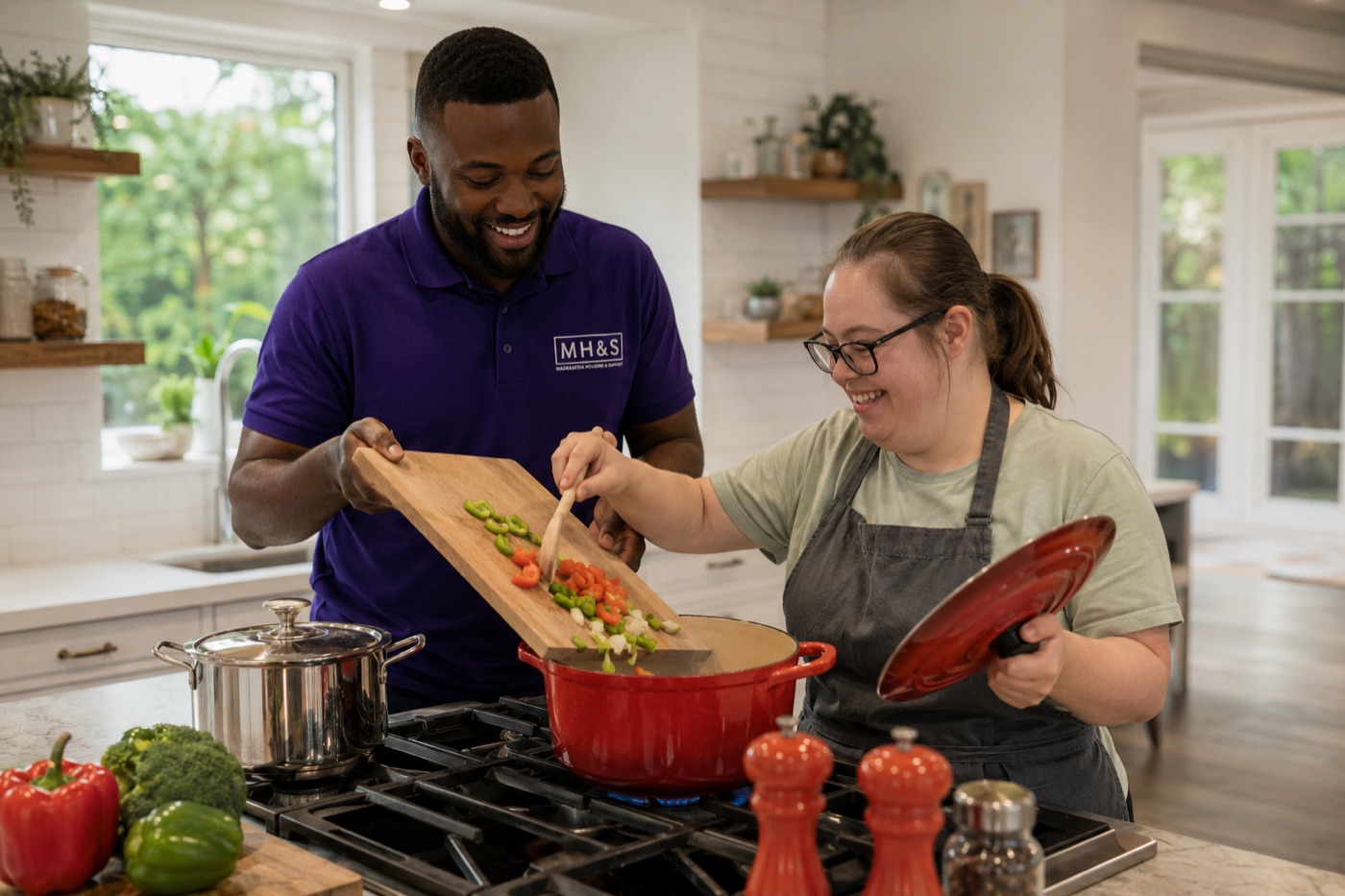
Person learning independent living skills
Life Skills
Who we support

Adults 18 to 65 with the following conditions

Often in combination. If you're unsure whether we're right for someone, call us and we'll give you an honest answer.

01

Learning Disabilities

Mild, moderate, and severe. Our approach, our training, and our homes are all shaped around this group specifically.

02

Autism Spectrum Conditions

Staff trained in autism-aware practice. Environments adapted for sensory needs. Structured routines where they help. Communication support where it's needed.

03

Epilepsy

Staff trained in epilepsy awareness, seizure recognition, and emergency response. Clear protocols that everyone understands.

04

Anxiety and Mental Health

Trauma-informed support in a stable home environment. Consistency in staffing matters here more than anywhere else.

05

Visual Impairments

Adapted environments and trained staff. Supporting people with partial sight or full visual impairment to live confidently and independently.

+

Not sure if we can help?

We support individuals with dual diagnoses and complex presentations. Get in touch and we'll tell you honestly whether we're the right fit.

Ready to make a referral?

We respond to referral enquiries within one working day. Phone calls are welcome.

Let's
talk

Family exploring options, NHS team making a referral, or someone interested in joining us. We'd like to hear from you.

Get in touch

We're based in Corby. Calls are always welcome and we try to answer every one.

Address
Corby Business Centre
Eismann Way, Corby NN17 5ZB
Phone
Making a referral?

Select "Referral" in the form. We'll follow up within one working day. You can also call directly if you'd prefer to speak to someone first.

Send us a message

We'll get back to you within one working day.

We use your details only to respond to your enquiry. We don't share them with anyone else.

Modern Slavery &
Human Trafficking Statement

Published in accordance with section 54(1) of the Modern Slavery Act 2015.

Organisation Maranatha Housing & Support
Financial Year Covered April 2025 – March 2026
Date Published June 2026
Review Due June 2027
Section 1

Introduction

This statement is published under section 54(1) of the Modern Slavery Act 2015 and covers the financial year April 2025 to March 2026.

Modern slavery and human trafficking are serious crimes. The people we support, adults with learning disabilities and associated conditions, can be at greater risk of exploitation than the general population. That is not an abstract concern for us; it is something our staff are trained to recognise and respond to as part of their daily work.

This statement describes the steps we have taken to make sure modern slavery is not taking place in our organisation or our supply chains, and what we plan to do next.

Section 2

About Our Organisation

Maranatha Housing & Support is a specialist supported living provider registered with and regulated by the Care Quality Commission (CQC). We provide housing and support to adults with learning disabilities, autism, epilepsy, and associated needs, based in Corby, Northamptonshire, and operating within the East Midlands.

Our directors have over 20 years of combined experience in nursing and social care. All staff are directly employed by us on standard contracts. We do not use umbrella company arrangements or unpaid trial shifts.

Section 3

Our Supply Chains

Our supply chains are entirely UK-based. As a small specialist provider, our procurement is limited in scope. We buy from suppliers in the following categories:

  • PPE and care consumables
  • Property maintenance and adaptation
  • Food and household supplies
  • IT, software, and communications
  • Training providers
  • Recruitment agencies, used occasionally for temporary cover
  • Transport

We have no international supply chains and no complex procurement arrangements.

Section 4

Policies

The following policies are reviewed annually and covered during staff induction. Together they set out how we prevent exploitation within our organisation and respond to it if it occurs:

  • Safeguarding Adults Policy. Sets out our duties to protect people from abuse, exploitation, and neglect, with escalation routes aligned to local safeguarding adult board procedures.
  • Whistleblowing Policy. Allows any employee or person working with us to raise concerns confidentially, without risk of detriment. This includes concerns about modern slavery.
  • Recruitment and Safer Employment Policy. Requires identity checks, right-to-work verification, and enhanced DBS clearance for all staff before they start.
  • Code of Conduct. Sets out the behaviour expected of every member of staff, including how to treat the people we support and how to challenge or report poor practice.
  • Equal Opportunities and Dignity at Work Policy. Makes clear that exploitation within our own workforce is not acceptable.
Section 5

Due Diligence

All new staff complete identity, right-to-work, and DBS checks before starting. No one begins work without satisfactory clearance. Where we use agencies for temporary staffing, we check that workers are engaged lawfully before they work with us.

New suppliers are asked about their employment practices before we engage them. For larger contracts we request confirmation that they have anti-slavery policies in place. We can and do end supplier relationships where concerns arise.

Support workers are trained to spot signs of exploitation in the people they support and to raise concerns through our safeguarding process.

Section 6

Risk Assessment

We have identified three areas where modern slavery risk is highest for our organisation:

  • The people we support. Adults with learning disabilities and complex needs are a recognised at-risk group. The risk of exploitation, including financial abuse, county lines involvement, and domestic exploitation, is real. Every member of staff is trained to recognise the signs.
  • Recruitment. The care sector can attract unethical recruitment practice. We address this through pre-employment checks and careful use of agencies.
  • Maintenance and property contractors. Sub-contractors in building and maintenance carry some risk of exploited labour. We screen suppliers and include compliance expectations in contracts.

Our overall risk is low. That is not a reason to be less careful; it is a reason to keep doing what we are doing.

Section 7

Training and Awareness

All staff receive safeguarding training at induction. This covers modern slavery specifically: what it is, what the warning signs look like in a care setting, and what to do if they have a concern. The training is repeated annually.

Topics covered include:

  • What modern slavery is and how it presents in supported living
  • Signs that someone may be being exploited or trafficked
  • How to respond, including making a safeguarding referral
  • The National Referral Mechanism and when it applies
  • Our internal reporting and whistleblowing process

Managers receive additional training on their responsibilities under the Modern Slavery Act 2015, including a direct reporting line to the directors for any concern.

Section 8

Monitoring

We track the following to check our approach is working:

  • Training completion. All staff must complete mandatory safeguarding training within four weeks of starting and annually thereafter. Completion is tracked and reported quarterly.
  • Safeguarding referrals. All referrals are logged and reviewed by the leadership team. Patterns are used to improve our practice.
  • Whistleblowing disclosures. Recorded and reviewed by the directors. Any concern involving exploitation is treated as urgent.
  • Supplier compliance. Suppliers confirm their anti-slavery position at each contract renewal.

We did not identify any instances of modern slavery in our organisation or supply chains during the year this statement covers. If we do in future, we will report to the relevant authorities immediately.

Section 9

Plans for 2026/27

  • Include an explicit anti-slavery clause in all new supplier contracts
  • Develop scenario-based training for support workers covering exploitation specific to our sector
  • Review and republish this statement by June 2027
  • Maintain engagement with the local safeguarding adult board on emerging risks

This statement has been approved by the directors of Maranatha Housing & Support and covers all operations carried out under the Maranatha Housing & Support name.

Approved by the Board of Directors
Maranatha Housing & Support
June 2026